
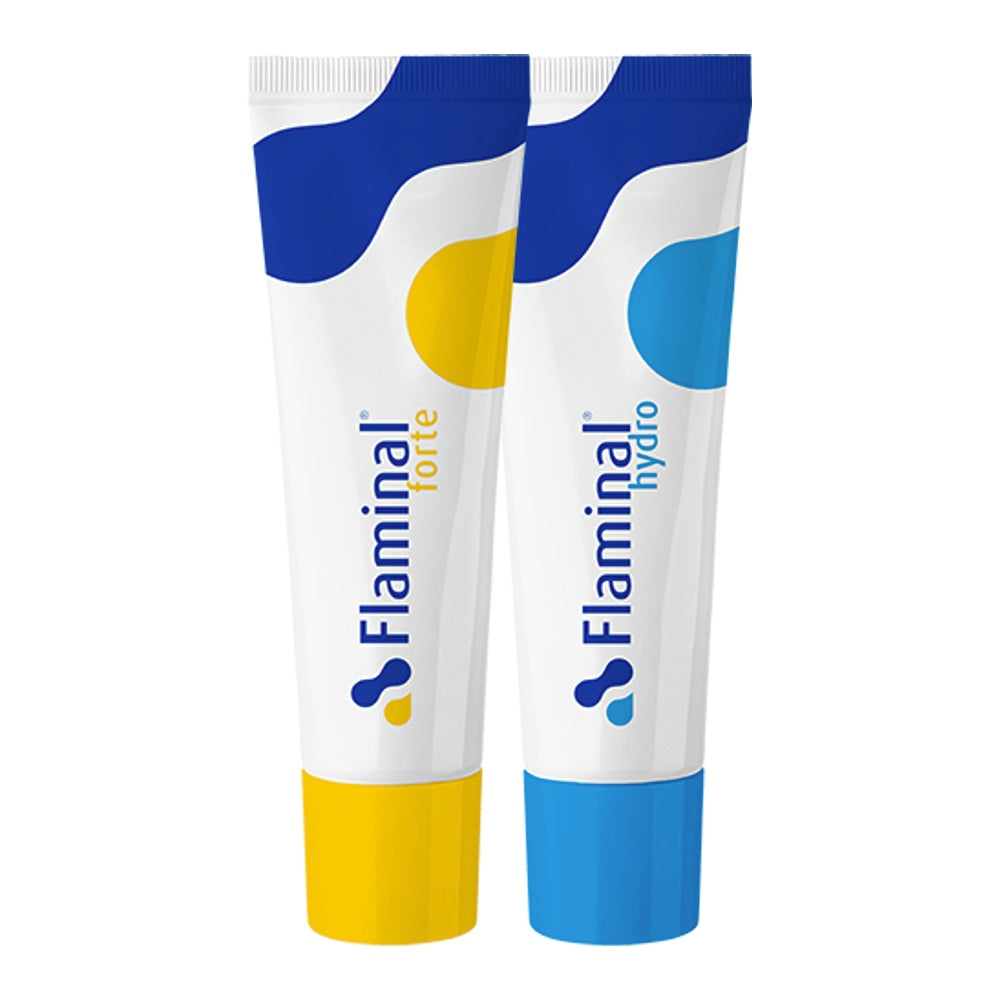
Flen Health Flaminal® Hydro & Forte Enzyme Alginogel® Wound Dressing – Multiple Sizes
Flaminal® Hydro and Flaminal® Forte are advanced Enzyme Alginogel® primary wound dressings for the management of acute and chronic wounds.
They combine an absorbent alginate gel with an antimicrobial enzyme system, helping maintain an appropriately moist wound environment, absorb excess wound exudate, support continuous autolytic debridement and provide antimicrobial protection.
Two formulations are available so that the dressing can be matched to the level of wound exudate:
-
Flaminal® Hydro – for slightly to moderately exuding wounds
-
Flaminal® Forte – for moderately to highly exuding wounds
Flaminal Hydro contains a lower concentration of alginate, while Flaminal Forte contains more alginate and therefore provides greater exudate-management capacity.
Available variants:
Flaminal® Hydro
-
5 × 15g tubes – PIP: 324-2971
-
1 × 50g tube – PIP: 344-9600
-
500g tub
Flaminal® Forte
-
5 × 15g tubes – PIP: 324-2963
-
1 × 50g tube – PIP: 344-9592
-
500g tub
Key features:
-
Advanced Enzyme Alginogel® wound dressing
-
Used as a primary wound dressing
-
Suitable for a wide range of acute and chronic wounds
-
Maintains a moist wound-healing environment
-
Absorbs wound exudate
-
Supports continuous autolytic debridement
-
Helps remove fibrin, slough and devitalised material
-
Contains an antimicrobial enzyme system
-
Antimicrobial activity takes place within the Flaminal® gel matrix
-
Helps manage bacteria absorbed into the gel
-
Helps protect the wound against infection and biofilm-related bacterial burden
-
Designed to be non-cytotoxic to healthy wound tissue
-
Helps protect wound margins
-
Conforms easily to wounds of different shapes and depths
-
Can be used throughout different phases of wound healing
-
Requires an appropriate secondary dressing
-
Available in Hydro and Forte formulations according to exudate level
How Flaminal® works:
Flaminal® combines three important wound-management functions.
1. Exudate management
The alginate component absorbs excess wound fluid while helping maintain an appropriately moist environment for wound healing.
2. Continuous debridement
Flaminal® supports autolytic debridement, helping loosen and remove fibrin, slough and necrotic material from the wound bed.
3. Antimicrobial enzyme system
Flaminal® contains the enzymes glucose oxidase and lactoperoxidase.
Glucose oxidase uses glucose, oxygen and water to generate peroxide intermediates. Lactoperoxidase then converts these into reactive oxygen species that act against bacteria absorbed within the Flaminal® gel matrix.
The antimicrobial mechanism therefore acts primarily within the dressing rather than by releasing a conventional antimicrobial agent into the wound.
Which version should I use?
Flaminal® Hydro
Choose Hydro for slightly to moderately exuding wounds.
Hydro contains approximately 3.5% alginate, giving it lower absorbency than Forte while maintaining a moist wound environment.
It may be particularly appropriate where a wound has slough or fibrin but produces relatively limited amounts of exudate.
Flaminal® Forte
Choose Forte for moderately to highly exuding wounds.
Forte contains approximately 5.5% alginate, providing greater absorption where wound-fluid levels are higher.
If Flaminal Hydro becomes very liquid or the secondary dressing becomes saturated rapidly, the wound may require the greater absorbency of Flaminal Forte.
Suitable for:
Flaminal® may be used for acute and chronic wounds that have breached the dermis, including:
-
Leg ulcers
-
Diabetic foot ulcers
-
Pressure ulcers / pressure injuries
-
Post-operative and surgical wounds
-
Traumatic wounds
-
Skin tears
-
Superficial and deep partial-thickness burns
-
Wounds following radiotherapy
-
Oncology wounds
-
Sloughy or fibrinous wounds requiring autolytic debridement
-
Wounds requiring preparation of the wound bed prior to procedures such as skin grafting or negative-pressure wound therapy
Flaminal® may also be used for infected wounds or wounds at risk of infection under appropriate medical supervision.
Directions:
Clean and irrigate the wound and surrounding skin according to the local wound-care protocol.
Select the appropriate formulation according to the level of wound exudate:
-
Use Flaminal Hydro for slightly to moderately exuding wounds
-
Use Flaminal Forte for moderately to highly exuding wounds
Apply Flaminal® over the entire wound bed in a sufficiently thick layer, approximately 4–5mm.
Ensure that the gel is in contact with the wound surface.
Cover Flaminal® with an appropriate secondary dressing, selected according to the amount of wound exudate.
At each dressing change:
-
Remove the secondary dressing
-
Clean and irrigate the wound
-
Remove remaining Flaminal®
-
Reassess the wound and exudate level
-
Apply a fresh 4–5mm layer
-
Apply a new appropriate secondary dressing
The dressing may remain in place while the gel structure remains intact. Depending on the amount of wound exudate, this may be approximately 1–4 days.
More heavily exuding wounds will generally require more frequent dressing changes.
When to change between Hydro and Forte:
Consider changing from Hydro to Forte if:
-
Hydro liquefies very rapidly
-
The gel loses its structure within approximately 24 hours
-
The secondary dressing becomes saturated quickly
-
Exudate levels have increased
Consider changing from Forte to Hydro if:
-
Exudate levels decrease significantly
-
Thick, whitish or dry alginate material begins to appear within the wound
-
Forte appears more absorbent than the wound requires
Wound condition and exudate level should always guide dressing selection.
Important information:
-
Flaminal® is a primary wound dressing and normally requires an appropriate secondary dressing
-
Selection between Hydro and Forte should be based primarily on wound exudate level
-
Infected wounds should be managed under medical supervision
-
Flaminal® should not replace appropriate assessment and treatment of clinically significant wound infection
-
Clean the wound thoroughly at every dressing change
-
Apply a sufficiently thick layer, approximately 4–5mm
-
Do not apply Flaminal® to the eye or eyelid
-
If accidental eye contact occurs, rinse immediately and seek appropriate healthcare advice
-
Flaminal® is not haemostatic and should not be relied upon to control active bleeding
-
The wound may initially appear larger as devitalised tissue and fibrin are removed during debridement
-
Natural variations in alginate colour do not necessarily indicate deterioration of the product
-
Seek professional wound-care advice if the wound deteriorates, becomes increasingly painful, develops spreading redness, swelling, malodour, systemic symptoms or other signs of infection
-
Diabetic foot ulcers, significant burns, pressure ulcers and complex chronic wounds should be managed according to an appropriate clinical wound-care plan
Storage and opened-product information:
-
Store according to the manufacturer's instructions
-
Do not freeze
-
If ambient storage temperature is likely to exceed 25°C, refrigerated storage may be preferable
-
Once opened and carefully recapped, Flaminal® tubes can be stored for up to 12 months, subject to the manufacturer's expiry date and storage instructions
-
A 500g tub should be used within one week after first opening
-
A pack should be used for one patient only
Product details:
-
Product: Flaminal® Hydro / Flaminal® Forte
-
Manufacturer: Flen Health UK Ltd
-
Product type: Enzyme Alginogel® primary wound dressing
-
Form: Gel
-
Hydro: Lower alginate content
-
Forte: Higher alginate content
-
Flaminal Hydro alginate content: Approximately 3.5%
-
Flaminal Forte alginate content: Approximately 5.5%
-
Antimicrobial enzyme system: Glucose oxidase and lactoperoxidase
-
Autolytic debridement: Yes
-
Exudate absorption: Yes
-
Secondary dressing required: Yes
Flaminal Hydro – UK presentations:
-
5 × 15g tubes – PIP 324-2971
-
1 × 50g tube – PIP 344-9600
-
1 × 500g tub
Flaminal Forte – UK presentations:
-
5 × 15g tubes – PIP 324-2963
-
1 × 50g tube – PIP 344-9592
-
1 × 500g tub
Flaminal® Hydro and Forte combine exudate management, continuous autolytic debridement and an antimicrobial enzyme system within a single primary wound dressing. Hydro is designed for slightly to moderately exuding wounds, while Forte provides greater absorption for moderately to highly exuding wounds.
Always follow the manufacturer's instructions for use and the wound-care plan provided by the appropriate healthcare professional. Seek clinical advice for infected, deteriorating, non-healing or otherwise complex wounds.
Flaminal® Hydro and Flaminal® Forte are advanced Enzyme Alginogel® primary wound dressings for the management of acute and chronic wounds.
They combine an absorbent alginate gel with an antimicrobial enzyme system, helping maintain an appropriately moist wound environment, absorb excess wound exudate, support continuous autolytic debridement and provide antimicrobial protection.
Two formulations are available so that the dressing can be matched to the level of wound exudate:
-
Flaminal® Hydro – for slightly to moderately exuding wounds
-
Flaminal® Forte – for moderately to highly exuding wounds
Flaminal Hydro contains a lower concentration of alginate, while Flaminal Forte contains more alginate and therefore provides greater exudate-management capacity.
Available variants:
Flaminal® Hydro
-
5 × 15g tubes – PIP: 324-2971
-
1 × 50g tube – PIP: 344-9600
-
500g tub
Flaminal® Forte
-
5 × 15g tubes – PIP: 324-2963
-
1 × 50g tube – PIP: 344-9592
-
500g tub
Key features:
-
Advanced Enzyme Alginogel® wound dressing
-
Used as a primary wound dressing
-
Suitable for a wide range of acute and chronic wounds
-
Maintains a moist wound-healing environment
-
Absorbs wound exudate
-
Supports continuous autolytic debridement
-
Helps remove fibrin, slough and devitalised material
-
Contains an antimicrobial enzyme system
-
Antimicrobial activity takes place within the Flaminal® gel matrix
-
Helps manage bacteria absorbed into the gel
-
Helps protect the wound against infection and biofilm-related bacterial burden
-
Designed to be non-cytotoxic to healthy wound tissue
-
Helps protect wound margins
-
Conforms easily to wounds of different shapes and depths
-
Can be used throughout different phases of wound healing
-
Requires an appropriate secondary dressing
-
Available in Hydro and Forte formulations according to exudate level
How Flaminal® works:
Flaminal® combines three important wound-management functions.
1. Exudate management
The alginate component absorbs excess wound fluid while helping maintain an appropriately moist environment for wound healing.
2. Continuous debridement
Flaminal® supports autolytic debridement, helping loosen and remove fibrin, slough and necrotic material from the wound bed.
3. Antimicrobial enzyme system
Flaminal® contains the enzymes glucose oxidase and lactoperoxidase.
Glucose oxidase uses glucose, oxygen and water to generate peroxide intermediates. Lactoperoxidase then converts these into reactive oxygen species that act against bacteria absorbed within the Flaminal® gel matrix.
The antimicrobial mechanism therefore acts primarily within the dressing rather than by releasing a conventional antimicrobial agent into the wound.
Which version should I use?
Flaminal® Hydro
Choose Hydro for slightly to moderately exuding wounds.
Hydro contains approximately 3.5% alginate, giving it lower absorbency than Forte while maintaining a moist wound environment.
It may be particularly appropriate where a wound has slough or fibrin but produces relatively limited amounts of exudate.
Flaminal® Forte
Choose Forte for moderately to highly exuding wounds.
Forte contains approximately 5.5% alginate, providing greater absorption where wound-fluid levels are higher.
If Flaminal Hydro becomes very liquid or the secondary dressing becomes saturated rapidly, the wound may require the greater absorbency of Flaminal Forte.
Suitable for:
Flaminal® may be used for acute and chronic wounds that have breached the dermis, including:
-
Leg ulcers
-
Diabetic foot ulcers
-
Pressure ulcers / pressure injuries
-
Post-operative and surgical wounds
-
Traumatic wounds
-
Skin tears
-
Superficial and deep partial-thickness burns
-
Wounds following radiotherapy
-
Oncology wounds
-
Sloughy or fibrinous wounds requiring autolytic debridement
-
Wounds requiring preparation of the wound bed prior to procedures such as skin grafting or negative-pressure wound therapy
Flaminal® may also be used for infected wounds or wounds at risk of infection under appropriate medical supervision.
Directions:
Clean and irrigate the wound and surrounding skin according to the local wound-care protocol.
Select the appropriate formulation according to the level of wound exudate:
-
Use Flaminal Hydro for slightly to moderately exuding wounds
-
Use Flaminal Forte for moderately to highly exuding wounds
Apply Flaminal® over the entire wound bed in a sufficiently thick layer, approximately 4–5mm.
Ensure that the gel is in contact with the wound surface.
Cover Flaminal® with an appropriate secondary dressing, selected according to the amount of wound exudate.
At each dressing change:
-
Remove the secondary dressing
-
Clean and irrigate the wound
-
Remove remaining Flaminal®
-
Reassess the wound and exudate level
-
Apply a fresh 4–5mm layer
-
Apply a new appropriate secondary dressing
The dressing may remain in place while the gel structure remains intact. Depending on the amount of wound exudate, this may be approximately 1–4 days.
More heavily exuding wounds will generally require more frequent dressing changes.
When to change between Hydro and Forte:
Consider changing from Hydro to Forte if:
-
Hydro liquefies very rapidly
-
The gel loses its structure within approximately 24 hours
-
The secondary dressing becomes saturated quickly
-
Exudate levels have increased
Consider changing from Forte to Hydro if:
-
Exudate levels decrease significantly
-
Thick, whitish or dry alginate material begins to appear within the wound
-
Forte appears more absorbent than the wound requires
Wound condition and exudate level should always guide dressing selection.
Important information:
-
Flaminal® is a primary wound dressing and normally requires an appropriate secondary dressing
-
Selection between Hydro and Forte should be based primarily on wound exudate level
-
Infected wounds should be managed under medical supervision
-
Flaminal® should not replace appropriate assessment and treatment of clinically significant wound infection
-
Clean the wound thoroughly at every dressing change
-
Apply a sufficiently thick layer, approximately 4–5mm
-
Do not apply Flaminal® to the eye or eyelid
-
If accidental eye contact occurs, rinse immediately and seek appropriate healthcare advice
-
Flaminal® is not haemostatic and should not be relied upon to control active bleeding
-
The wound may initially appear larger as devitalised tissue and fibrin are removed during debridement
-
Natural variations in alginate colour do not necessarily indicate deterioration of the product
-
Seek professional wound-care advice if the wound deteriorates, becomes increasingly painful, develops spreading redness, swelling, malodour, systemic symptoms or other signs of infection
-
Diabetic foot ulcers, significant burns, pressure ulcers and complex chronic wounds should be managed according to an appropriate clinical wound-care plan
Storage and opened-product information:
-
Store according to the manufacturer's instructions
-
Do not freeze
-
If ambient storage temperature is likely to exceed 25°C, refrigerated storage may be preferable
-
Once opened and carefully recapped, Flaminal® tubes can be stored for up to 12 months, subject to the manufacturer's expiry date and storage instructions
-
A 500g tub should be used within one week after first opening
-
A pack should be used for one patient only
Product details:
-
Product: Flaminal® Hydro / Flaminal® Forte
-
Manufacturer: Flen Health UK Ltd
-
Product type: Enzyme Alginogel® primary wound dressing
-
Form: Gel
-
Hydro: Lower alginate content
-
Forte: Higher alginate content
-
Flaminal Hydro alginate content: Approximately 3.5%
-
Flaminal Forte alginate content: Approximately 5.5%
-
Antimicrobial enzyme system: Glucose oxidase and lactoperoxidase
-
Autolytic debridement: Yes
-
Exudate absorption: Yes
-
Secondary dressing required: Yes
Flaminal Hydro – UK presentations:
-
5 × 15g tubes – PIP 324-2971
-
1 × 50g tube – PIP 344-9600
-
1 × 500g tub
Flaminal Forte – UK presentations:
-
5 × 15g tubes – PIP 324-2963
-
1 × 50g tube – PIP 344-9592
-
1 × 500g tub
Flaminal® Hydro and Forte combine exudate management, continuous autolytic debridement and an antimicrobial enzyme system within a single primary wound dressing. Hydro is designed for slightly to moderately exuding wounds, while Forte provides greater absorption for moderately to highly exuding wounds.
Always follow the manufacturer's instructions for use and the wound-care plan provided by the appropriate healthcare professional. Seek clinical advice for infected, deteriorating, non-healing or otherwise complex wounds.